
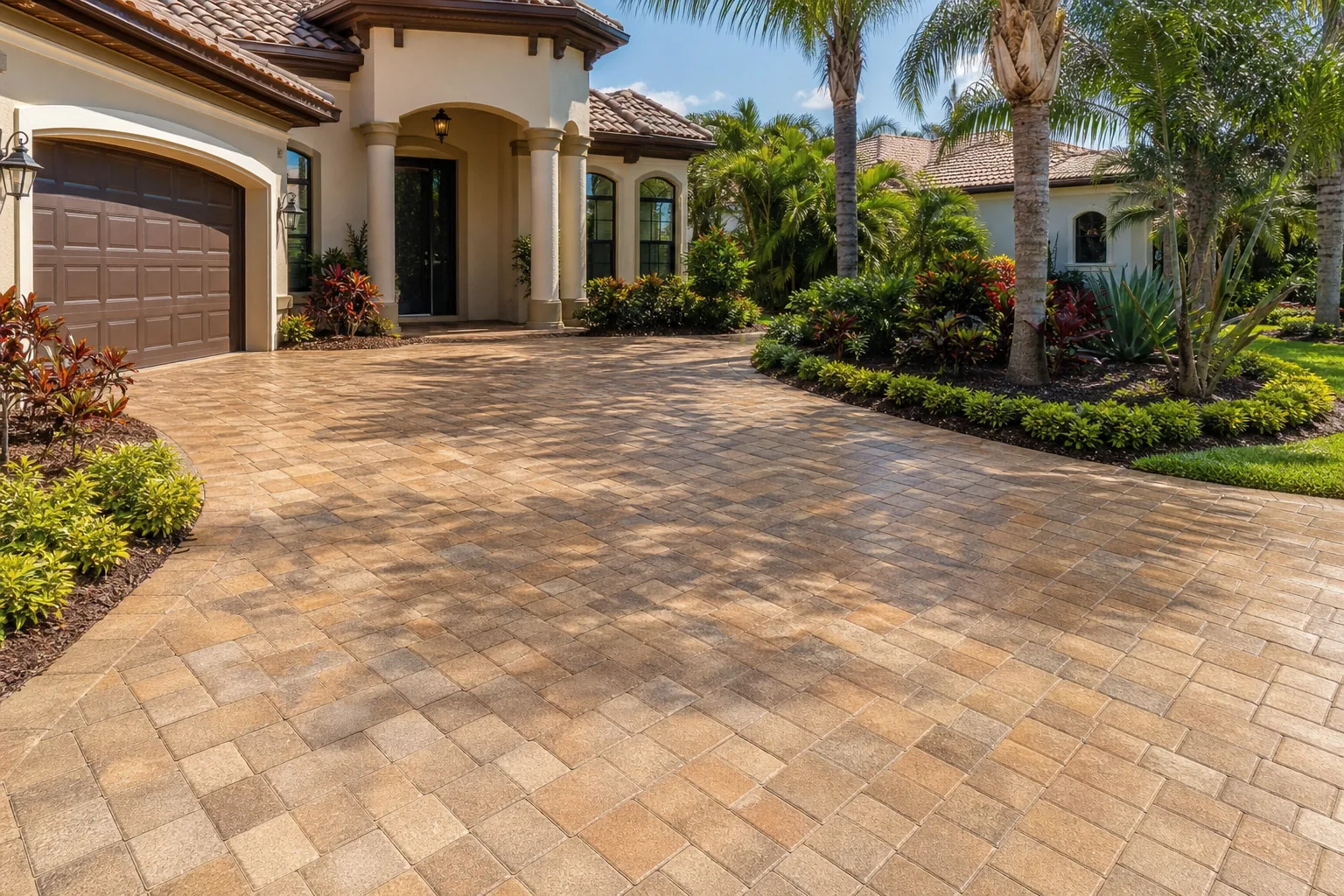
Short answer: pavers get cleaned at 1,500–2,500 PSI, not the 3,000+ used on poured concrete, because the joint sand is structural. Cleaning almost always needs re-sanding afterwards. Typical cost $150–$550.
The single most common way paver work goes wrong is being treated as though it were concrete.
A paver surface is not a slab. It is hundreds of individual units held in position by the sand packed between them. That sand is not decorative — it is what stops the pavers shifting, rocking and separating. Hit the joints with 3,000 PSI and you will blast a good portion of it out in a single afternoon.
For a few weeks the result looks superb: crisp, dark, freshly defined joint lines. Then the first heavy rain moves the remaining sand, edges start to lift, weeds find the gaps, and by the following summer the surface is visibly worse than before it was cleaned.
Not sure what your property needs?
Send photos. We will tell you what we would do and roughly what it costs — even if the answer is that it can wait.
How pavers get cleaned properly
Same surface cleaner as a driveway, meaningfully less pressure, and a different sequence.
| Surface | Method we use | Pressure | Why |
|---|---|---|---|
| Concrete pavers | Surface cleaner, reduced | 1,500–2,500 PSI | Above this the joint sand starts to lift. |
| Clay brick pavers | Surface cleaner, reduced | 1,200–2,000 PSI | Softer face; edges chip under a narrow jet. |
| Travertine | Low pressure + solution | 800–1,400 PSI | Porous natural stone, etches easily. |
| Marble or coral stone | Chemical, minimal pressure | Under 800 PSI | Acid-sensitive and soft — solution does the work. |
| Permeable pavers | Assessed first | Varies | Aggregate joints are meant to stay open; different rules. |
The sequence matters as much as the pressure. Weeds and moss are treated and removed before any water touches the surface — washing a weed simply relocates its seeds across the rest of the patio.
Joint sand: the part that matters
Any honest paver clean ends with a conversation about sand, because cleaning always removes some.
- Regular joint sand is the cheap option. It works, it washes out over time, and weeds eventually get into it.
- Polymeric sand contains a binder that sets when wetted, locking the joints. It resists washout and suppresses weeds far better. It costs $0.35 to $0.70 per square foot on top of the clean, and in Florida it is almost always worth it.
One warning worth having in advance: polymeric sand must go down on a properly dry surface and be activated exactly as the manufacturer specifies. Rushed, it hazes over the paver faces and sets there. That haze is genuinely difficult to remove. It is the most common paver complaint we get called out to fix, and it is always the result of someone trying to finish in one day.
Do I have to re-sand every time?
Not always, but plan for it. If the joints are already low before we start — you can see the paver edges standing proud — the answer is yes regardless of how gently we clean.
If the joints are full and in good condition, a careful clean at correct pressure may only need topping up in places. We will tell you which situation you are in when we look at it, not after we have finished.
What paver cleaning costs
Typical Jacksonville range
$150–$550
Roughly $0.25–$0.45 per sq ft
More than plain concrete because joints need care and usually need re-sanding afterward.
| Job size | Typical range |
|---|---|
| Paver walkway or entry (up to 300 sq ft) | $150–$250 |
| Paver driveway (600–900 sq ft) | $225–$425 |
| Paver pool deck or lanai (800–1,200 sq ft) | $275–$550 |
| What changes the price | Effect |
|---|---|
| Polymeric joint sand replacement | +$0.35 to $0.70/sq ft |
| Weed and root removal from joints | +$50 to $150 |
| Efflorescence (white haze) treatment | +$100 to $300 |
Ranges reflect typical Jacksonville-area jobs in 2026. They are planning estimates, not quotes — the real number depends on access, buildup severity, and what the surface is actually made of. See how Jacksonville pricing works across every service →
Weeds, efflorescence and rust
| Problem | What it is | How it is treated |
|---|---|---|
| Weeds and moss in joints | Seeds germinating in damp sand | Killed and cleared first, then polymeric sand to keep them out |
| White chalky haze | Efflorescence — mineral salts migrating up through the paver | Specific efflorescence remover, not pressure. Can recur while moisture moves through |
| Orange staining | Iron from irrigation water | Acid treatment. See rust removal |
| Dark green film | Algae in shaded or north-facing areas | Comes off with the standard clean |
| Black spots that will not shift | Artillery fungus, usually from nearby mulch | Partially removable at best. Switching mulch type prevents recurrence |
| Sunken or rocking pavers | Base failure underneath | Not a cleaning problem — the base needs lifting and re-setting |
Cleaning versus sealing
They are separate services with separate prices, and you do not have to buy both.
Cleaning restores the colour. Sealing protects it — it locks the joint sand, resists staining, and deepens the tone depending on the finish chosen. It costs several times more than cleaning because it is mostly labour and sealer volume.
If you are considering it, the one thing not to accept is a company willing to clean and seal on the same day. Pavers need to dry properly first — usually 24 to 72 hours depending on weather — and sealing over trapped moisture is what causes the cloudy white finish nobody wants. How paver sealing actually works.
Areas where we do this most
Answers
Paver cleaning questions
Can you pressure wash pavers?
Will cleaning remove the sand between my pavers?
What is the white haze on my pavers?
How much does paver cleaning cost in Jacksonville?
Should I use polymeric sand or regular sand?
Can you fix pavers that have sunk or gone wobbly?
Related
What people usually book alongside this
Get a real number, not a range
Send a few wide shots plus close-ups of the worst areas and we will price it properly.
Or email hello@jaxpropressurewash.com
What helps us quote fast
- One wide shot of each side that needs cleaning
- Close-ups of the worst staining
- Your address, so we can check the property size
- Roughly when it was last cleaned