
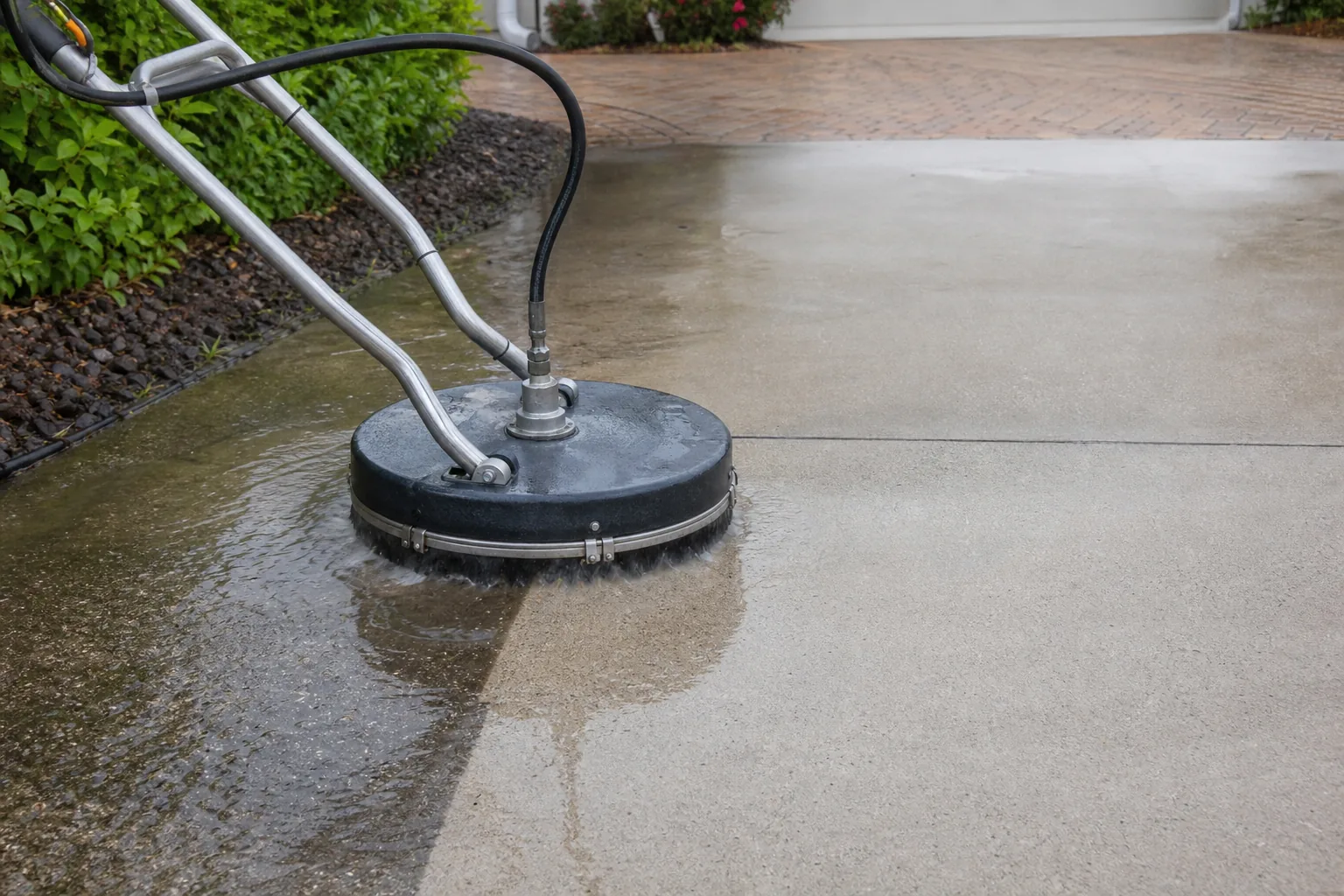
Short answer: concrete is cleaned with a rotating surface cleaner at 2,500–3,500 PSI, which is what produces an even finish. A handheld wand is what produces stripes. A two-car driveway costs $95–$185; rust and oil are separate line items.
Nothing changes how a property looks for less money than cleaning the concrete. It is also the service most often done badly, and the damage is visible from the street for years.
The mistake is almost always the same one. Someone attacks a driveway with a handheld wand — the narrow, high-pressure nozzle that comes with every consumer pressure washer — and works across the slab in overlapping arcs. Wherever the wand paused, the concrete got cleaned deeper. The result is the striped, wave-patterned finish that the trade calls tiger striping, and it is effectively permanent until the entire slab is corrected.
Not sure what your property needs?
Send photos. We will tell you what we would do and roughly what it costs — even if the answer is that it can wait.
Why the tool matters more than the pressure
A surface cleaner is a circular housing with two or four jets on a spinning bar underneath. Because the bar rotates at speed, every square inch beneath it receives the same dwell — regardless of how fast the operator walks or where they pause.
That is the whole trick. Even pressure produces an even result. The housing also contains the spray, so you are not throwing dirty water across the garage door, the neighbour's car and the flower beds.
We use the wand deliberately, for edges, expansion joints, the strip along the garage and anywhere the housing physically cannot reach. Those get feathered into the surface-cleaned area rather than left as a visible border.
On a typical Jacksonville driveway that has never been professionally cleaned, the difference between what comes out and what people expected is usually larger than they thought. Concrete does not go grey with age nearly as much as everyone assumes — it goes grey with biofilm.
Concrete surfaces, and the pressure each one takes
| Surface | Method we use | Pressure | Why |
|---|---|---|---|
| Poured concrete driveway | Surface cleaner | 2,500–3,500 PSI | Durable once cured; even pass is what matters. |
| Broom-finish sidewalk | Surface cleaner | 2,500–3,000 PSI | Texture holds growth; needs consistent coverage. |
| Stamped / decorative concrete | Reduced pressure | 1,200–2,000 PSI | Colour hardener and release agent sit in the top layer. |
| Exposed aggregate | Reduced pressure | 1,500–2,200 PSI | Too much pressure loosens the stone from the matrix. |
| Garage floor | Degreaser + surface cleaner | 2,500–3,000 PSI | Oil has to be lifted chemically before washing. |
| Brick or paver walkway | See paver cleaning | 1,500–2,500 PSI | Joint sand blows out above this. |
Most driveway bookings include the front walkway, the apron and the city sidewalk. Doing them together costs meaningfully less than doing them separately, and it avoids the odd look of a bright driveway meeting a grey sidewalk.
What driveway cleaning costs
Typical Jacksonville range
$95–$400
Roughly $0.15–$0.3 per sq ft of flatwork
Priced on square footage of slab, not on how dirty it looks. Rust and oil are separate line items because they need different chemistry.
| Job size | Typical range |
|---|---|
| Two-car driveway (~600 sq ft) | $95–$185 |
| Three-car driveway (~900 sq ft) | $135–$265 |
| Driveway + front walkway | $145–$300 |
| Driveway + walkway + city sidewalk + curb | $185–$400 |
| Extended or circular drive (1,400+ sq ft) | $240–$500 |
| What changes the price | Effect |
|---|---|
| Rust / irrigation staining | +$75 to $250 |
| Oil or transmission drip | +$50 to $200 |
| Never cleaned, heavy black organic growth | +20% to 35% |
| Post-treatment sealer | +$0.35 to $0.75/sq ft |
Ranges reflect typical Jacksonville-area jobs in 2026. They are planning estimates, not quotes — the real number depends on access, buildup severity, and what the surface is actually made of. See how Jacksonville pricing works across every service →
Stains that need more than washing
General darkening is organic and comes off with a proper wash. These four do not, and they are priced separately because they are different work.
| Stain | What it actually is | Realistic outcome |
|---|---|---|
| Orange arcs | Iron from irrigation water | Removes well with acid treatment. More on rust |
| Dark spots by the garage | Oil or transmission fluid soaked into the pores | Fresh lifts fully; old lightens and leaves a shadow. More on oil |
| Brown patches under trees | Tannin leaching from oak leaves and acorns | Comes out well with the right chemistry, not with pressure |
| Reddish streaks near beds | Fertilizer iron burn | Usually removes with the same treatment as irrigation rust |
| White chalky bloom | Efflorescence — mineral salts from within the slab | Treatable, but returns unless the moisture source changes |
| Black tire marks | Rubber plasticiser transfer | Improves substantially; heavy marks may ghost |
Why did my driveway look worse right after it was cleaned?
Two usual causes. The first is striping from a wand, which we covered above. The second is more interesting: cleaning removed a uniform layer of grime that had been hiding patches, repairs and colour differences in the concrete itself. The slab was always mismatched — the dirt was concealing it.
This is common on Westside and Arlington driveways that have had sections replaced over the decades. We flag it before starting when we can see it coming, because it is a genuinely disappointing surprise otherwise.
Should you seal concrete afterwards?
It is worth considering in this climate, and it is not essential.
A penetrating sealer soaks into the slab rather than sitting on top of it, reducing how much moisture the concrete absorbs. Less moisture means slower organic growth, which means longer between cleans and an easier clean when it comes. It runs about $0.35 to $0.75 per square foot on top of the wash.
Two things to be clear about. Sealer goes on dry concrete, not damp concrete — which means a separate visit a few days later, not the same afternoon. And a film-forming sealer on a driveway can get slippery when wet, so we use penetrating products outdoors and leave the glossy finishes for pavers where they belong.
If the slab is cracked, spalling or already flaking, sealing it is money spent on a surface that needs repair first.
What cleaning will not fix
- Cracks and settling. Cleaning makes them more visible, not less.
- Spalling and flaking. Where the surface has already broken down, washing removes loose material and exposes what is underneath.
- Colour mismatch between pours. Different batches of concrete cure to different shades. That is permanent.
- Paint, epoxy or sealer failure. A failing coating needs stripping, not washing.
- Deeply etched damage. Battery acid, muriatic acid and some de-icers eat into the slab. Cleaning cannot fill that back in.
Where we clean the most concrete
Before & after
Same driveway — before and after
Matched angles so you can judge the concrete, not a different property.
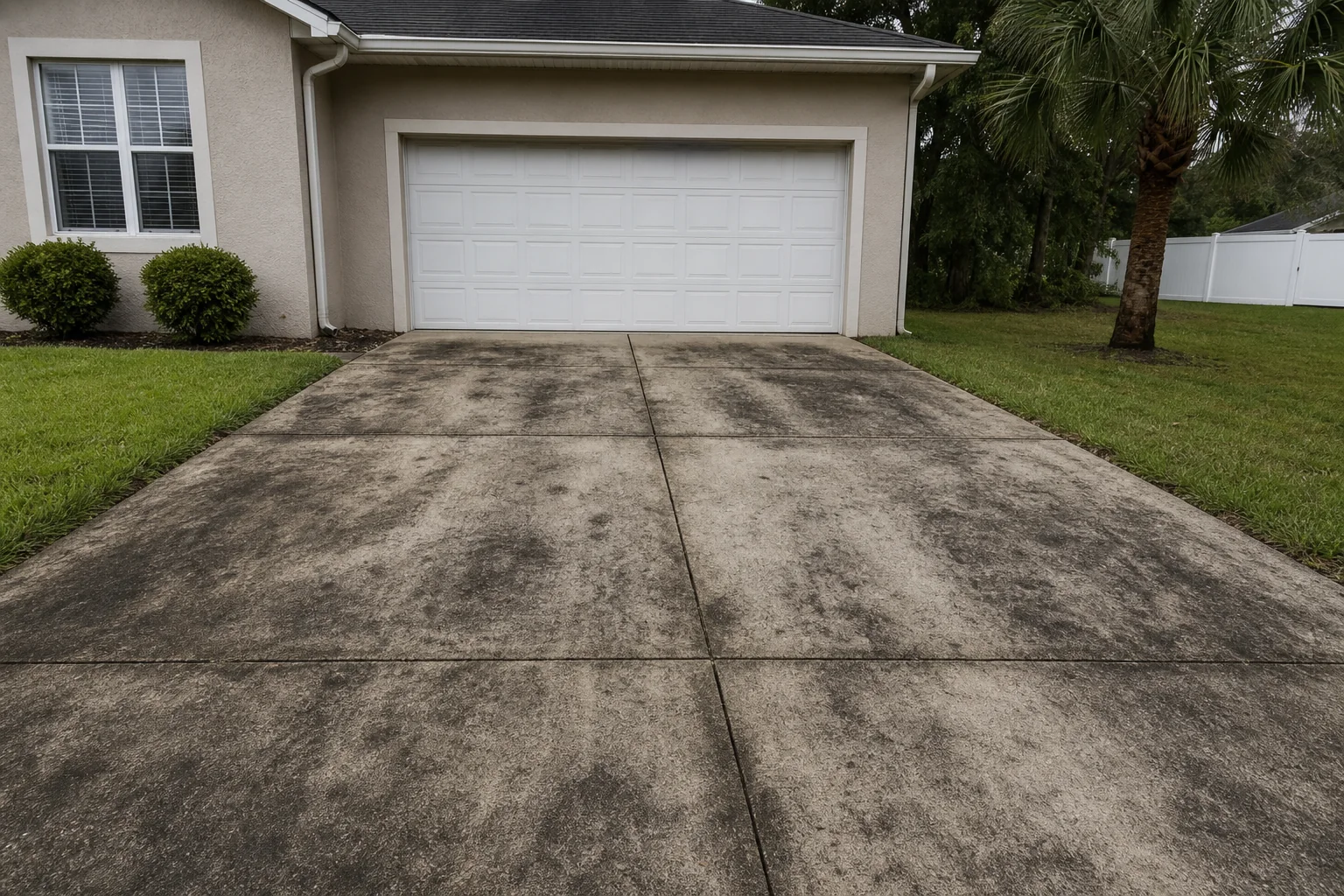
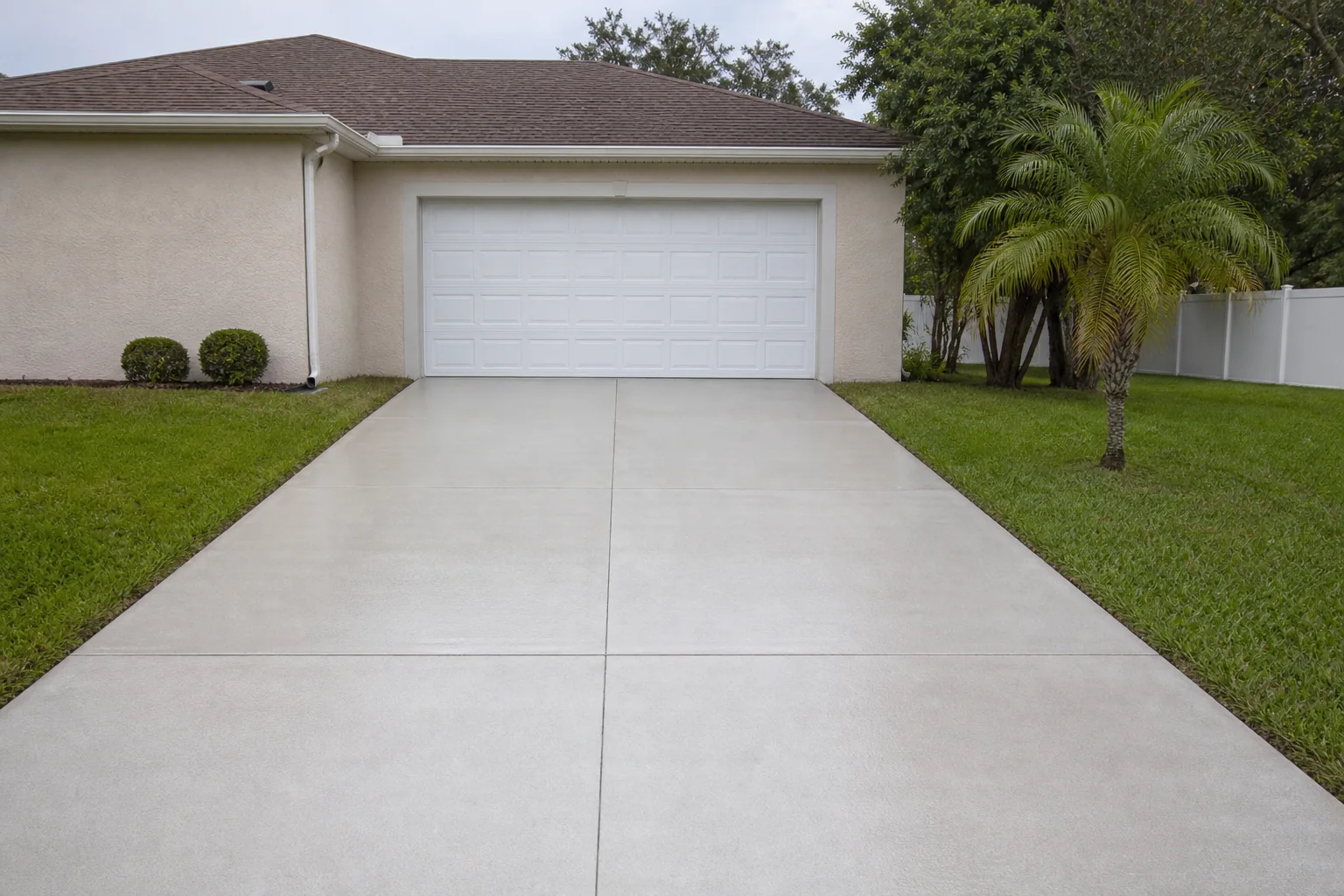
Driveway algae and film removal in Jacksonville
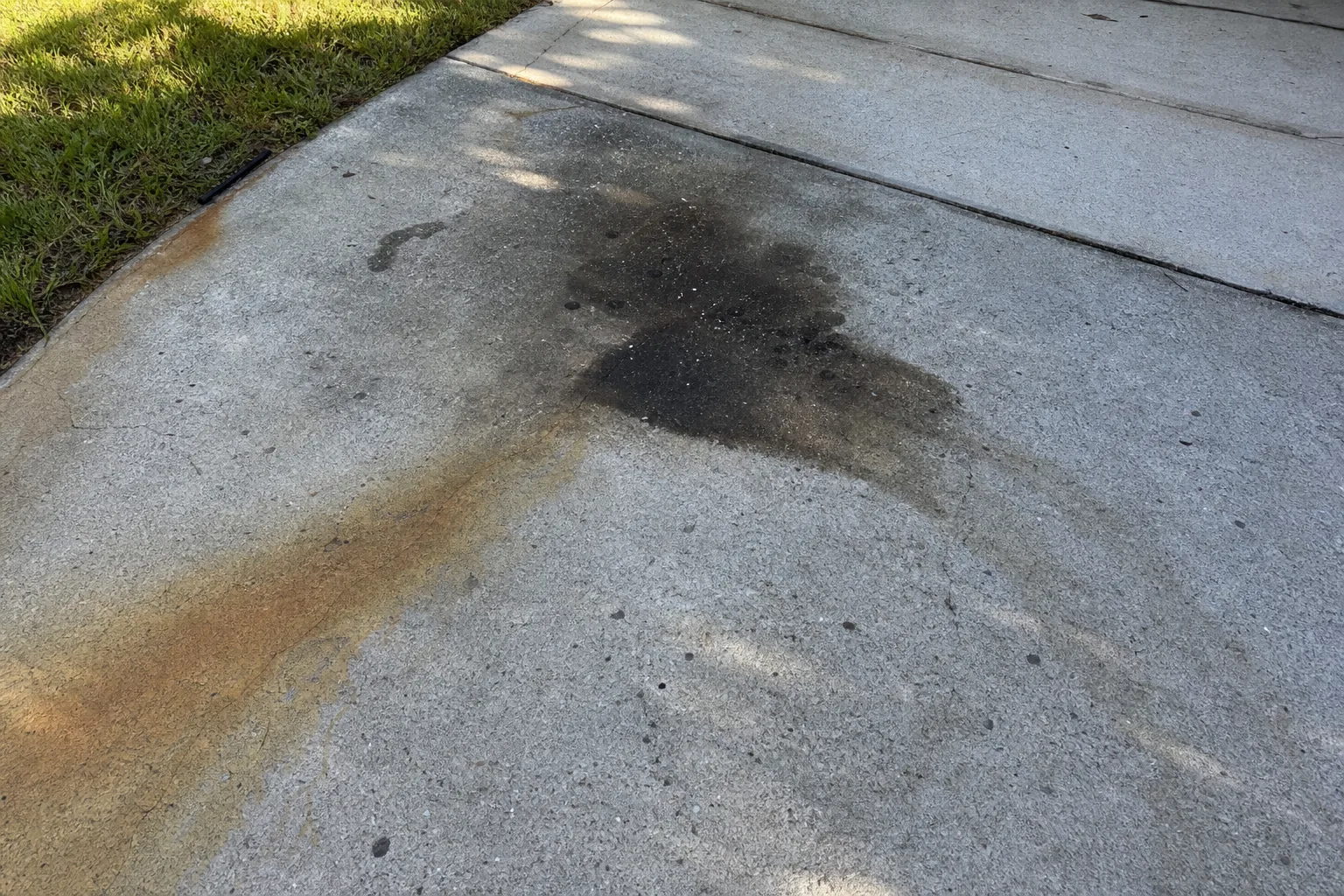
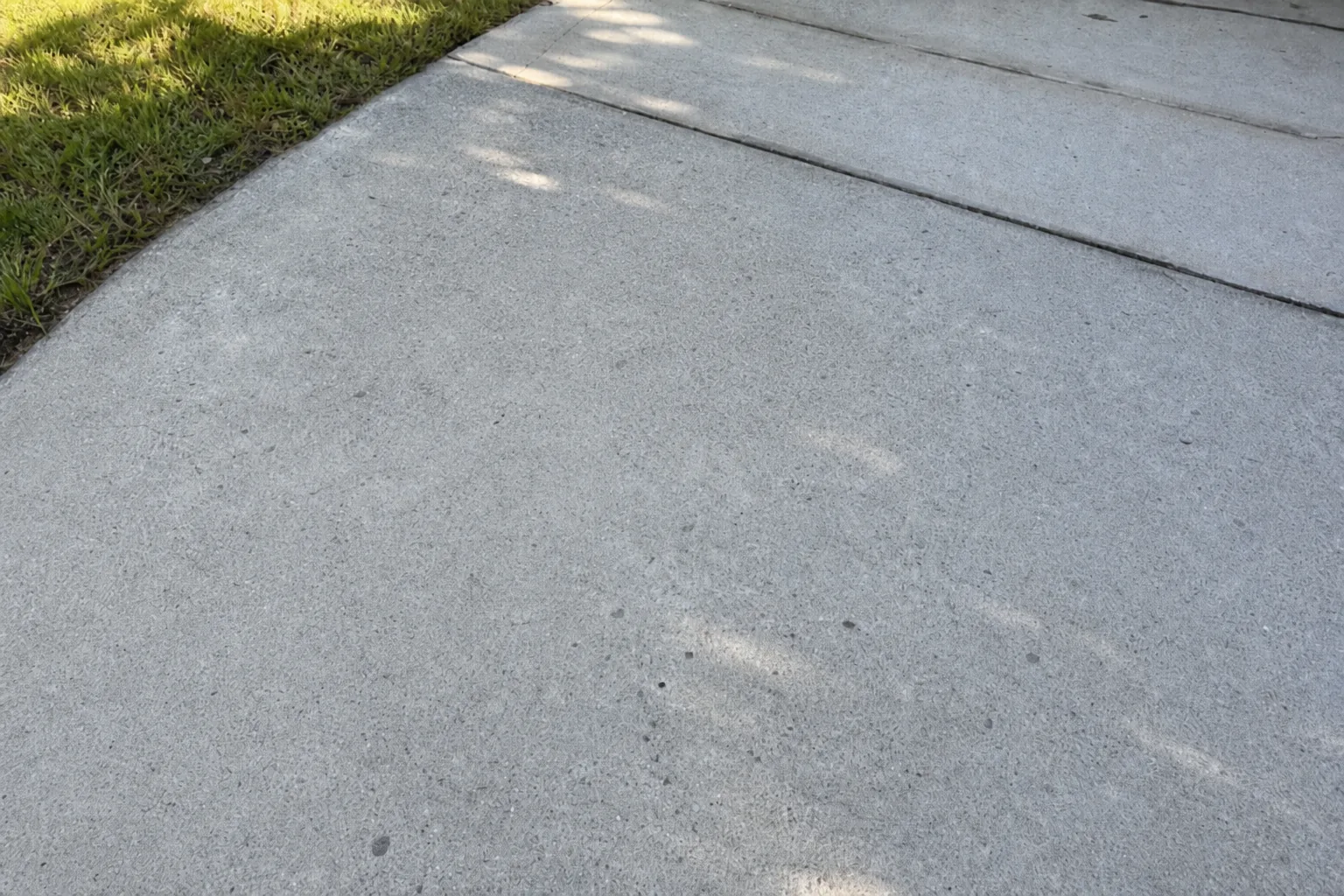
Oil and organic stain improvement on flatwork
Answers
Driveway and concrete questions
Why does my driveway have stripes after being cleaned?
How much does it cost to clean a driveway in Jacksonville?
Will pressure washing damage my concrete?
Can you get oil stains out of a driveway?
What are the orange stains on my concrete?
Should I seal my driveway after cleaning?
How often should a Jacksonville driveway be cleaned?
Related
What people usually book alongside this
Snap driveway photos for a same-day quote path
Show the full slab plus close-ups of oil, rust, paint, or tire marks so we can price surface cleaning vs. specialty treatment.
Or email hello@jaxpropressurewash.com
What helps us quote fast
- One wide shot of each side that needs cleaning
- Close-ups of the worst staining
- Your address, so we can check the property size
- Roughly when it was last cleaned